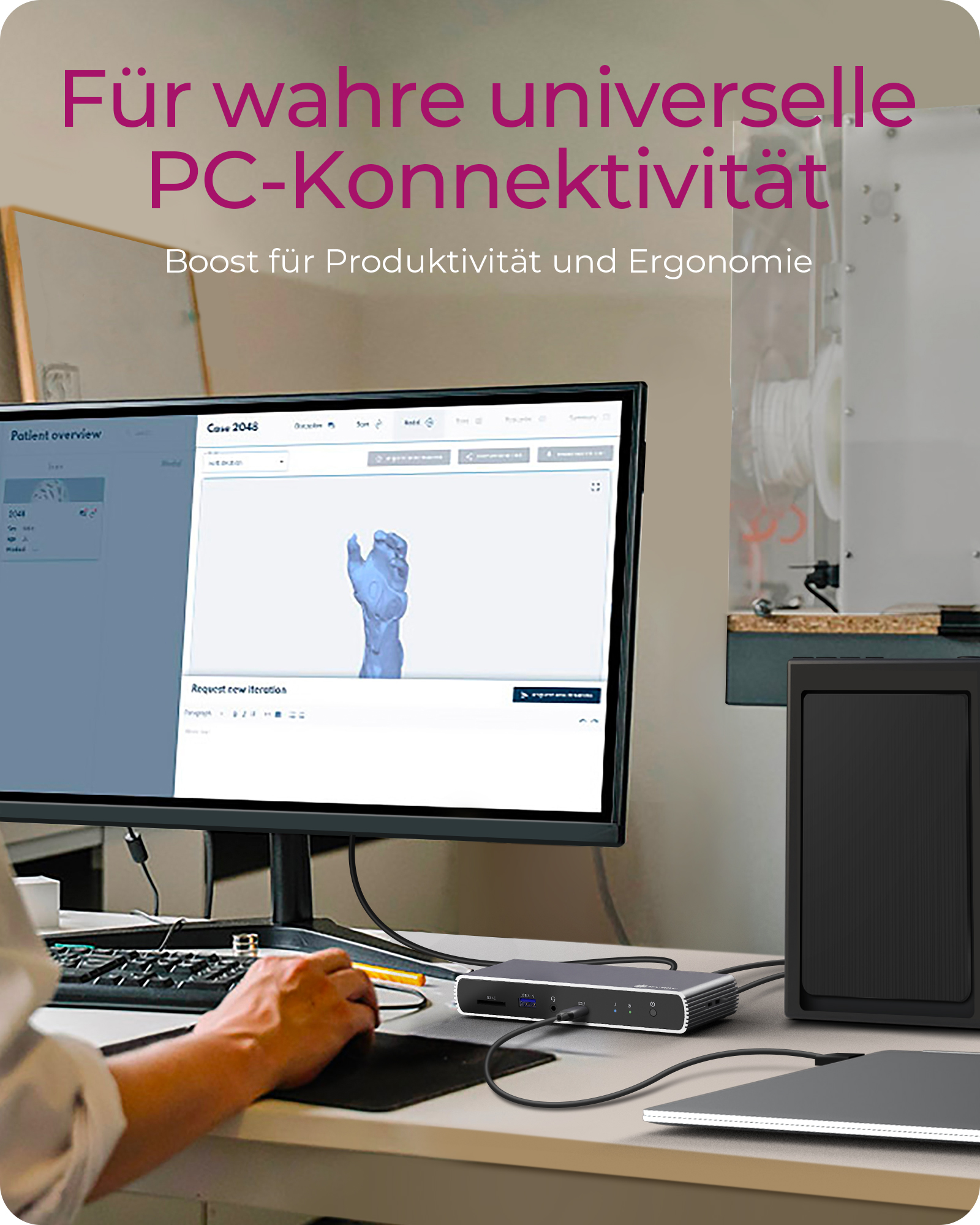
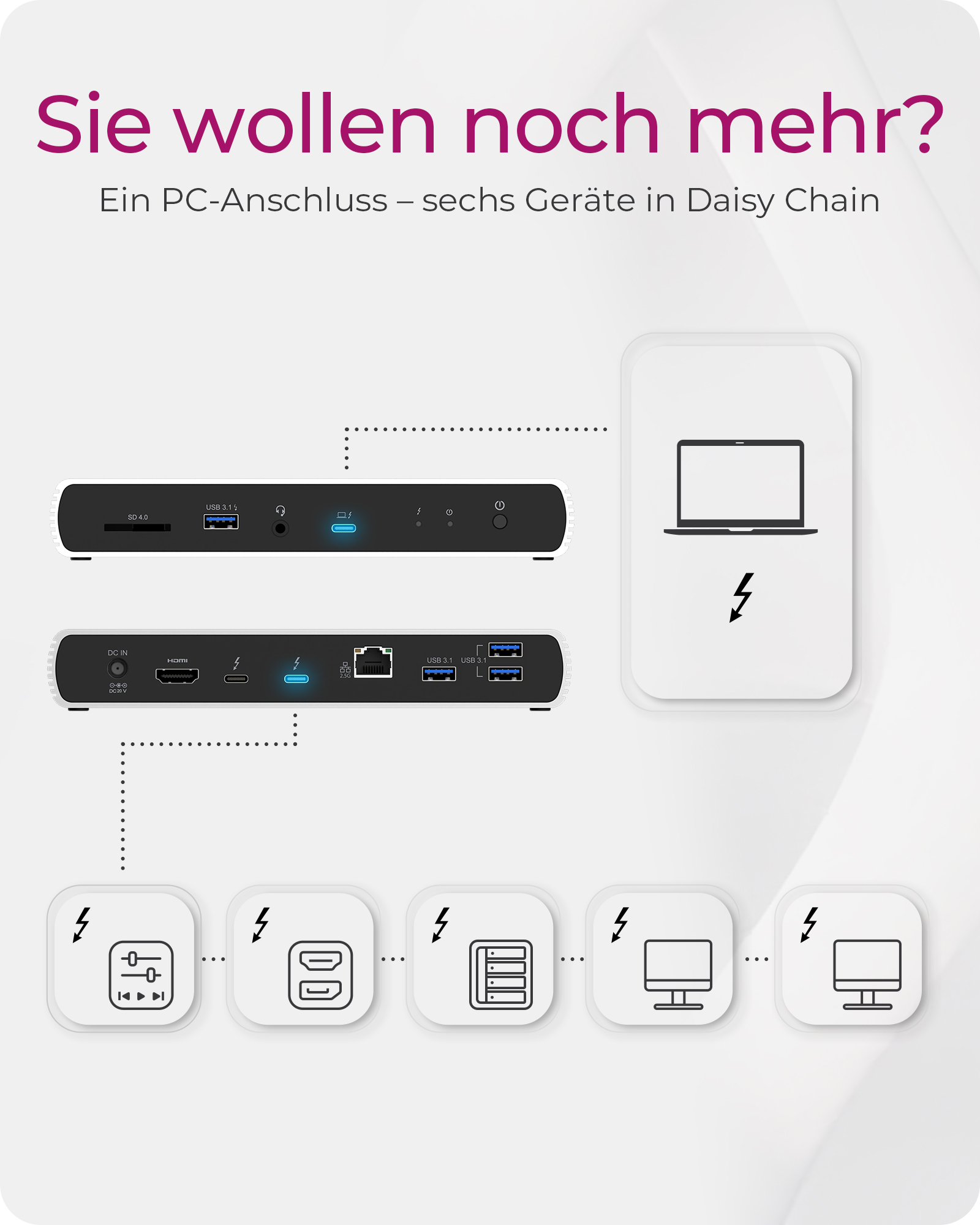
INTELLIGENTER ARBEITSBEREICH: Die nächste Generation von Thunderbolt™ 4 bringt endlich echte PC-Konnektivität zu Notebooks und anderen Geräten: schnelle Übertragungsgeschwindigkeiten, multifunktionale Anschlüsse und ein Schreibtisch ohne Kabelsalat
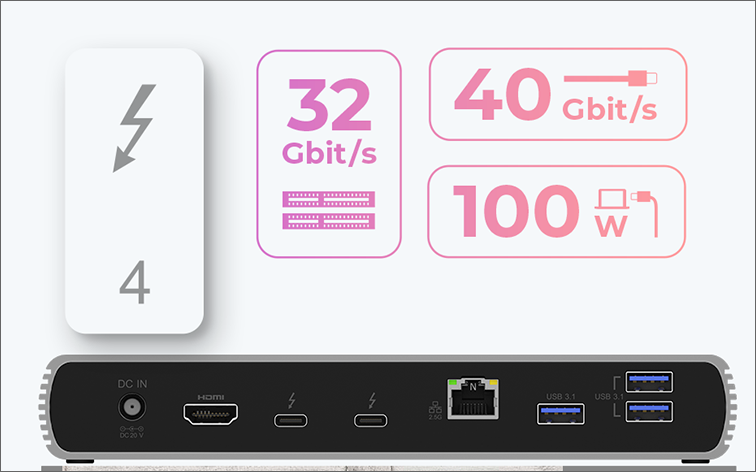
THUNDERBOLT 4 – DIE ZUKUNFT DER KONNEKTIVITÄT: Kompatibel mit z. B. DisplayPort, PCIe und USB 4 sowie abwärtskompatibel mit früheren Thunderbolt™-Versionen: es ist die Kabelverbindung, die alle anderen übertrifft
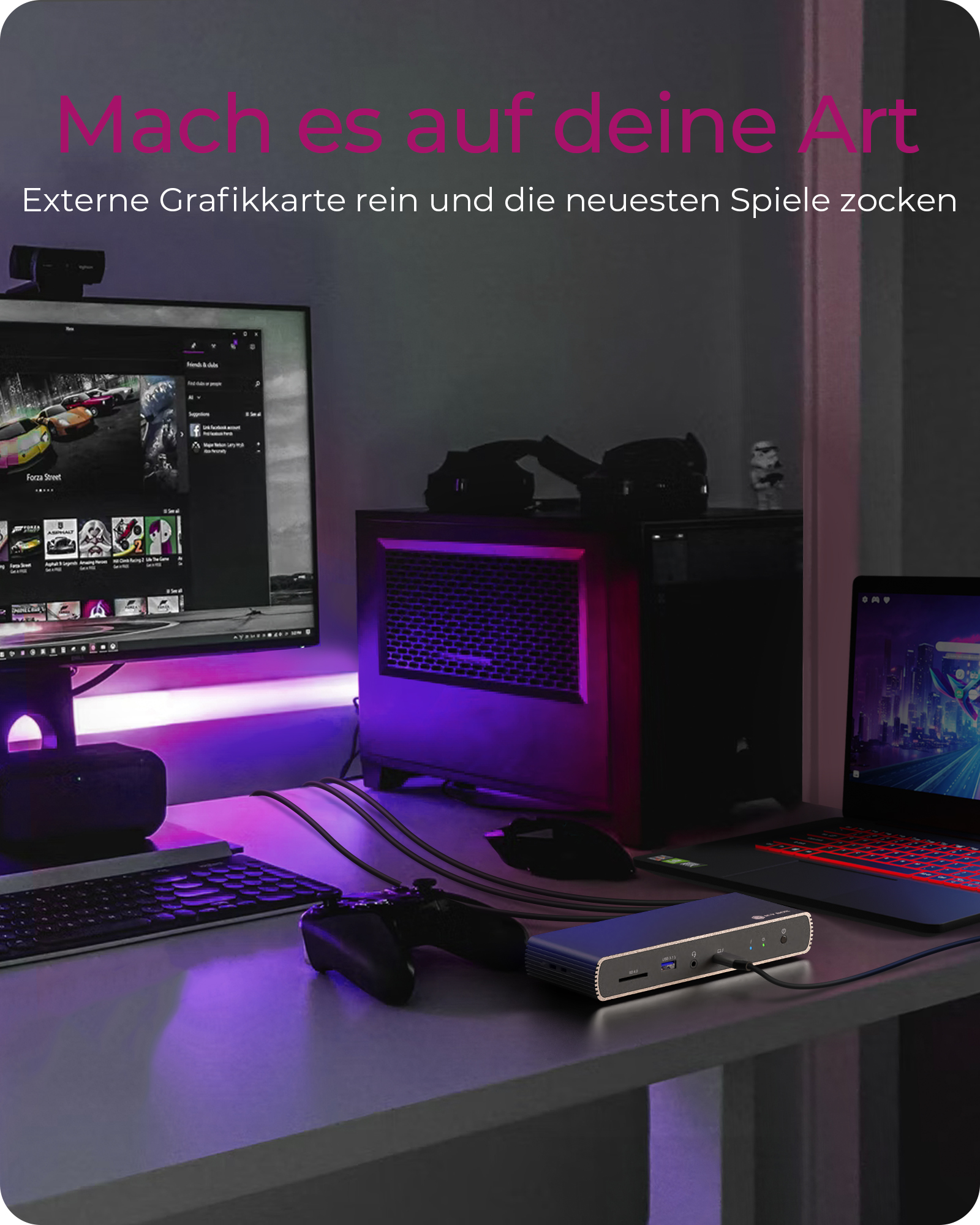
THUNDERBOLT 4 UND GAMING: Nutzer externer PCIe-Geräte in Verbindung mit dem IB-DK8801-TB4 und einem kompatiblen TB4-System können Spiele jetzt direkt von einer externen NVMe-SSD ausführen
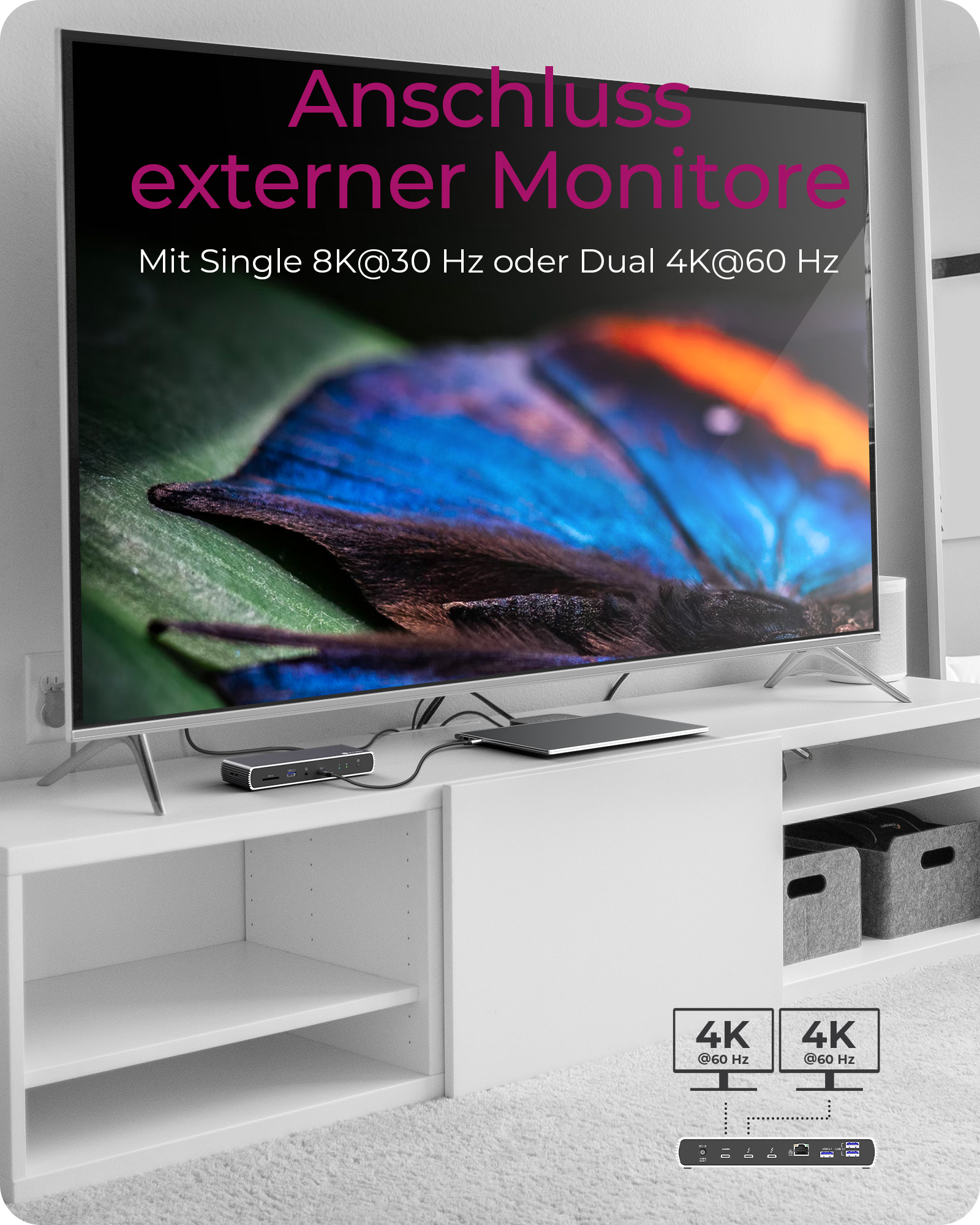
EINTAUCHEN IN VIELFALT: Hohe Auflösungen für Thunderbolt™ 4-fähige Geräte. Steigern Sie die visuelle Produktivität mit Ultra-HD-Bildschärfe, Kontrast und Farbtiefe über die verfügbaren HDMI®- und Thunderbolt™ 4-Anschlüsse.
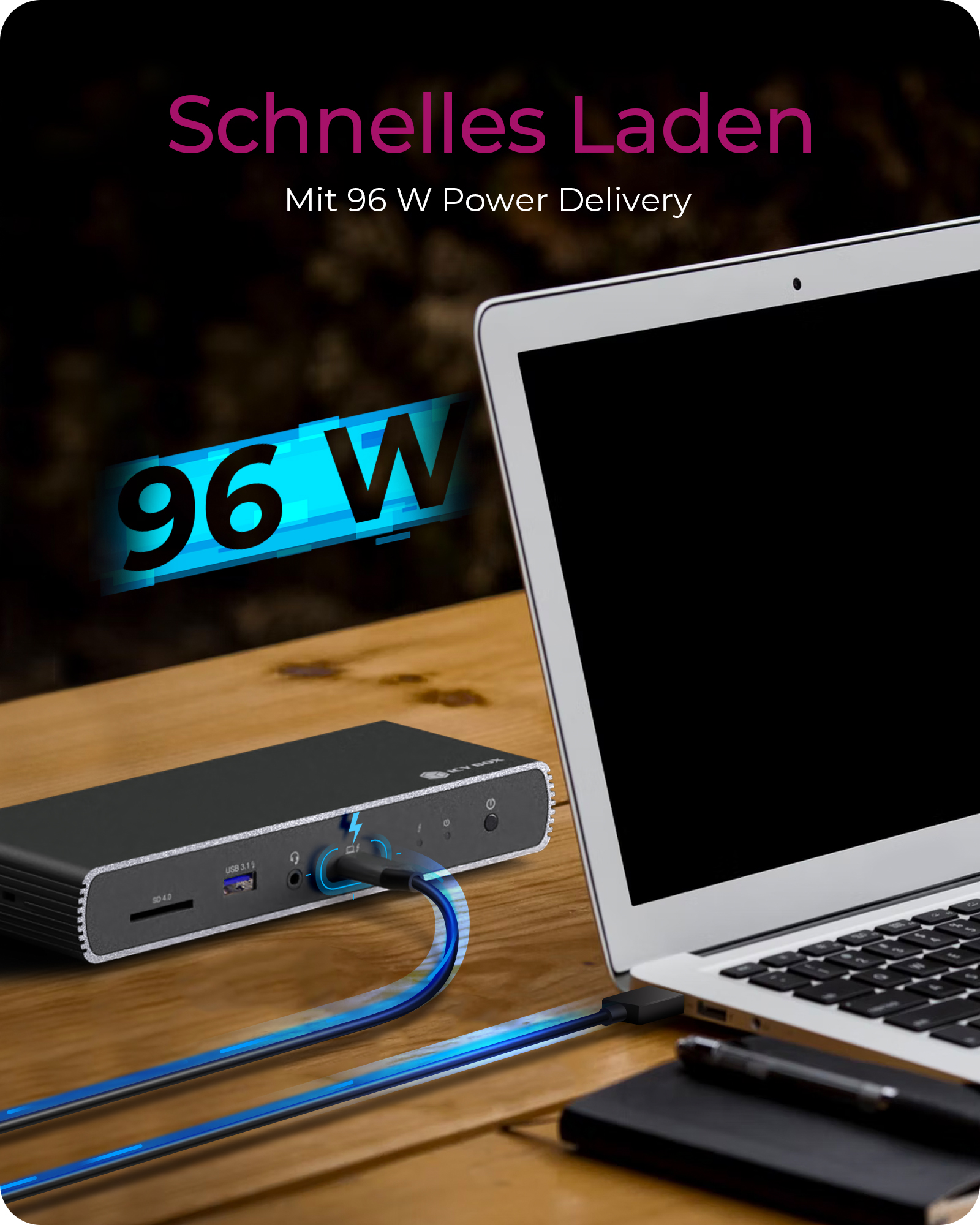
THUNDERBOLT 4 UND PD: IB-DK8801-TB4 lädt Smartphones, Notebooks und mehr, alles, was weniger als 100 Watt benötigt. Der Vorteil: kein separates Netzteil erforderlich